Collaborative research · Stage 01 · 2020–2021
Panelki / Generative Knitwear
What does it take to turn a generative image into physical knitwear, and which steps could we simplify or automate to make this process more accessible?
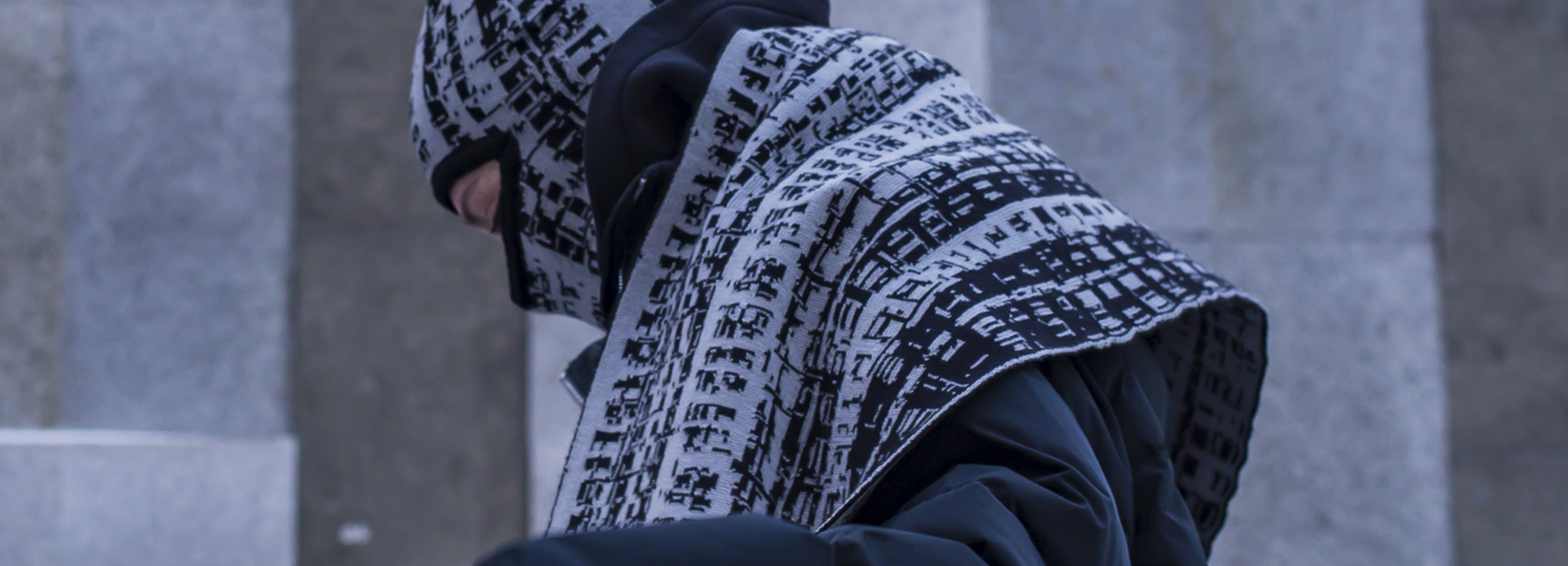
Creative motivation
I wanted to make garments that expressed my own visual language, while exploring new tools that could make the process faster, more economical and less wasteful. Growing up around my father’s knitwear production, I saw how much material ended up as discarded offcuts. That experience made me question the production methods I later used as a designer.
Experimenting with generative imagery and digital prototyping became a way to rethink how I could realise my own design vision. More economical use of materials was one of the motivations behind this exploration.
Question
How could we turn a generated architectural image into knitwear without repeatedly redrawing it by hand? In the production workflow I encountered, textile pattern programmers simplified and redrew images pixel by pixel in Paint, adapting their dimensions before preparing knitting instructions in M1. Rasterising an image in Photoshop or Illustrator did not, by itself, resolve that handover.
My role and collaborators
I identified the image-to-knitting bottleneck, defined the task for our machine-learning specialist and directed the development of a solution. I brought garment and production knowledge, proposed the knitwear direction and designed the pieces. My ML collaborator implemented the code, and a knitting programmer prepared the M1 instructions.
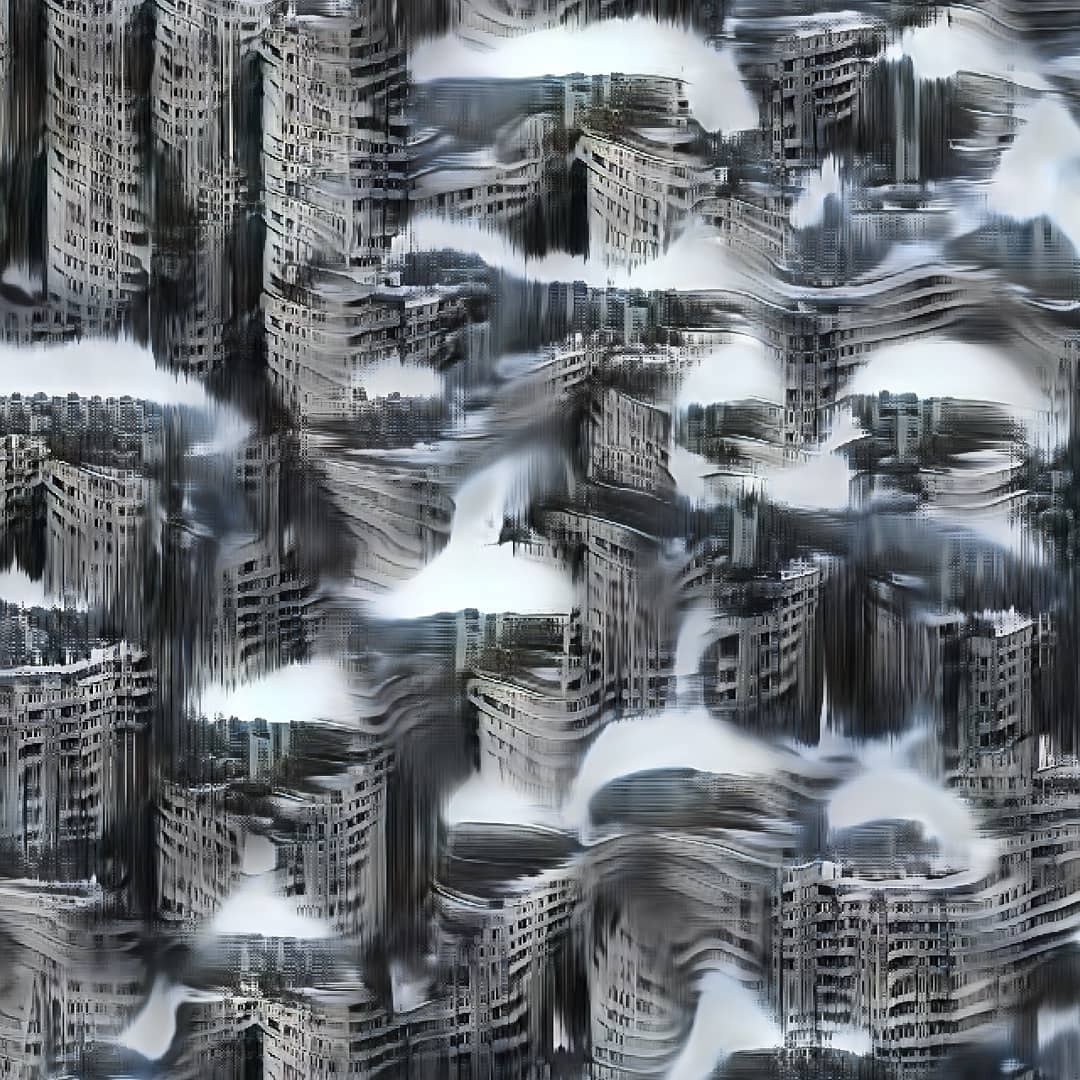
My collaborator trained a model on approximately 10,000 photographs of Russian urban housing, predominantly prefabricated apartment blocks. I selected generated images for the textile designs. We saw this recurring architecture as a recognisable face of contemporary urban Russia and explored translating it into something people could wear.
Experiment: image → chart → garment
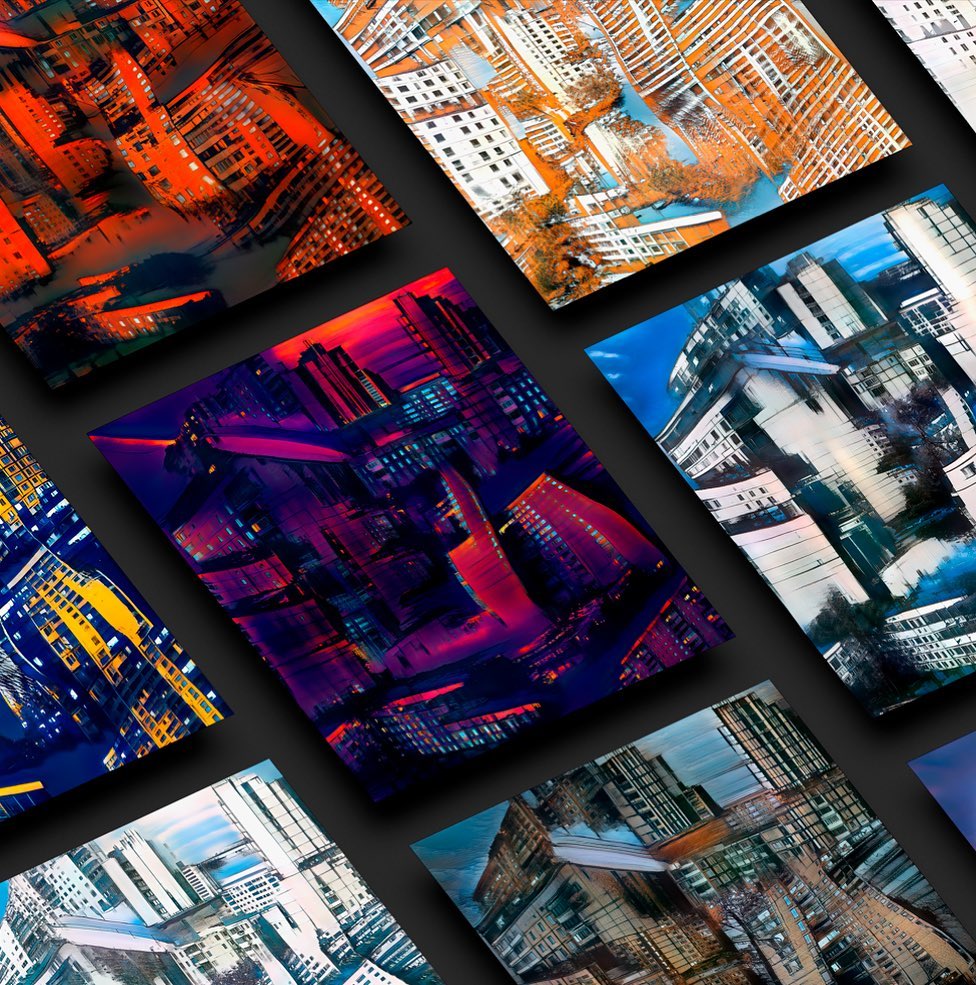
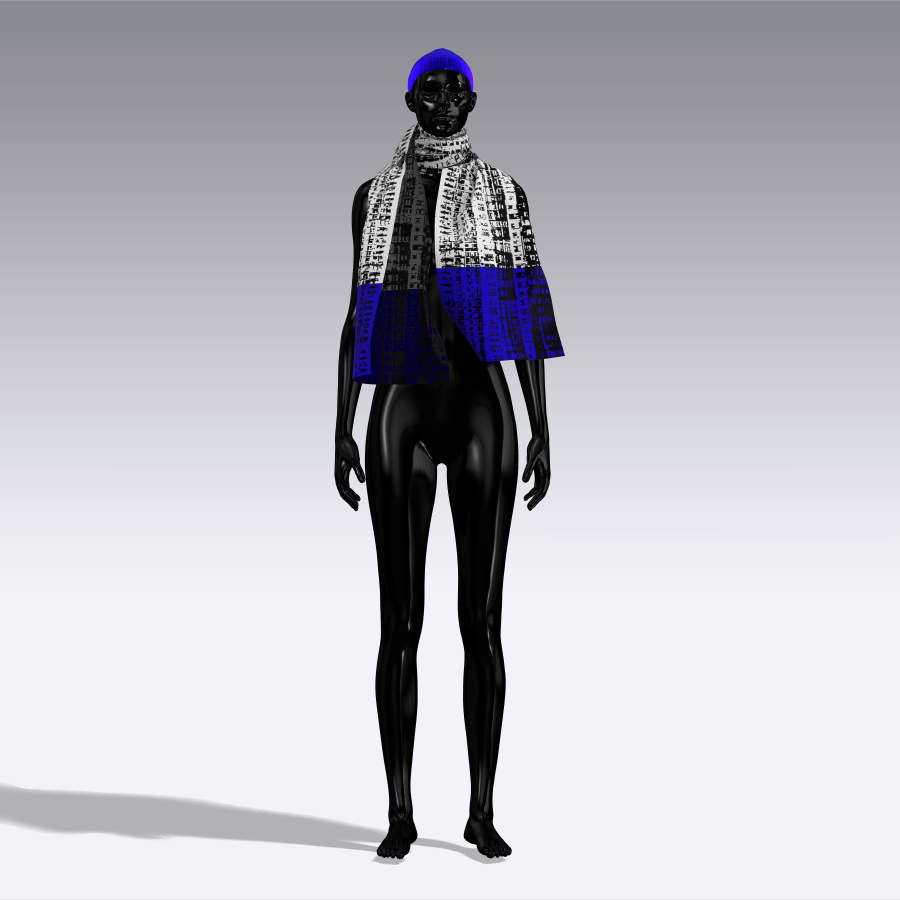
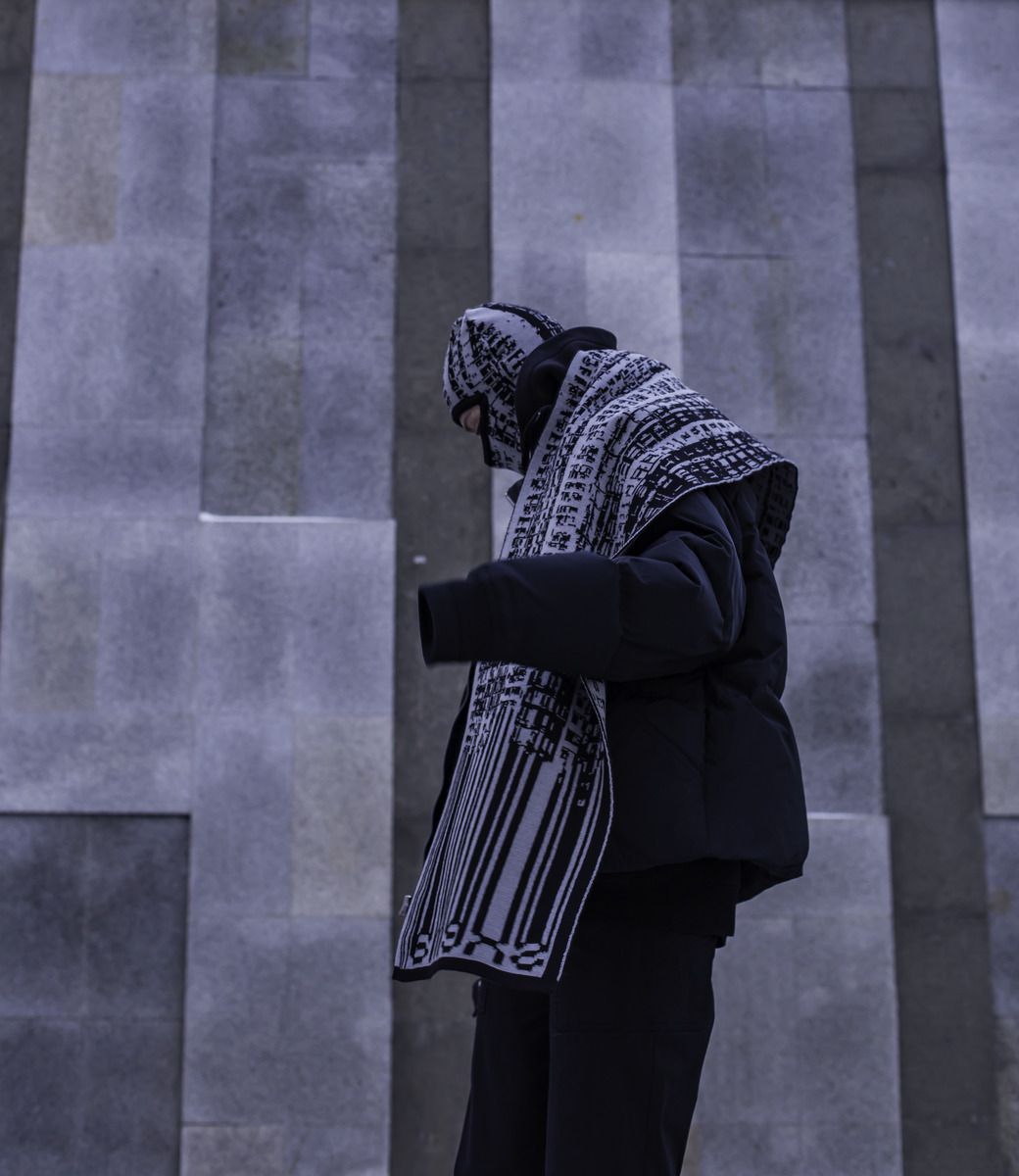
Panelki was the first stage of this research. We generated pixel images and reduced their palettes to match the available yarn colours: for example, five yarn colours required a five-colour image. We initially removed colours by hand, then automated palette reduction. We tested motif scale, proportions and colour on 3D scarves, hats and balaclavas before production.
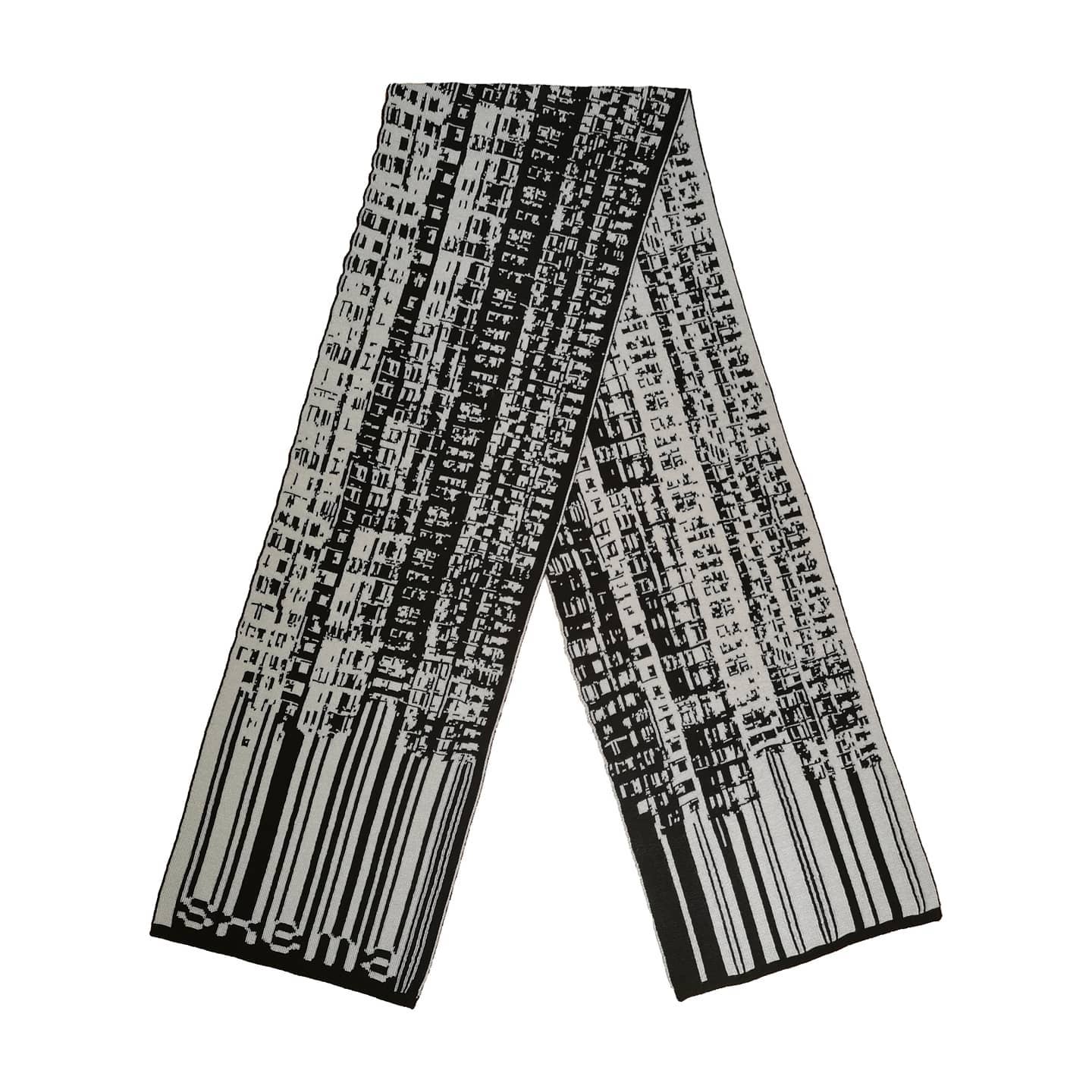
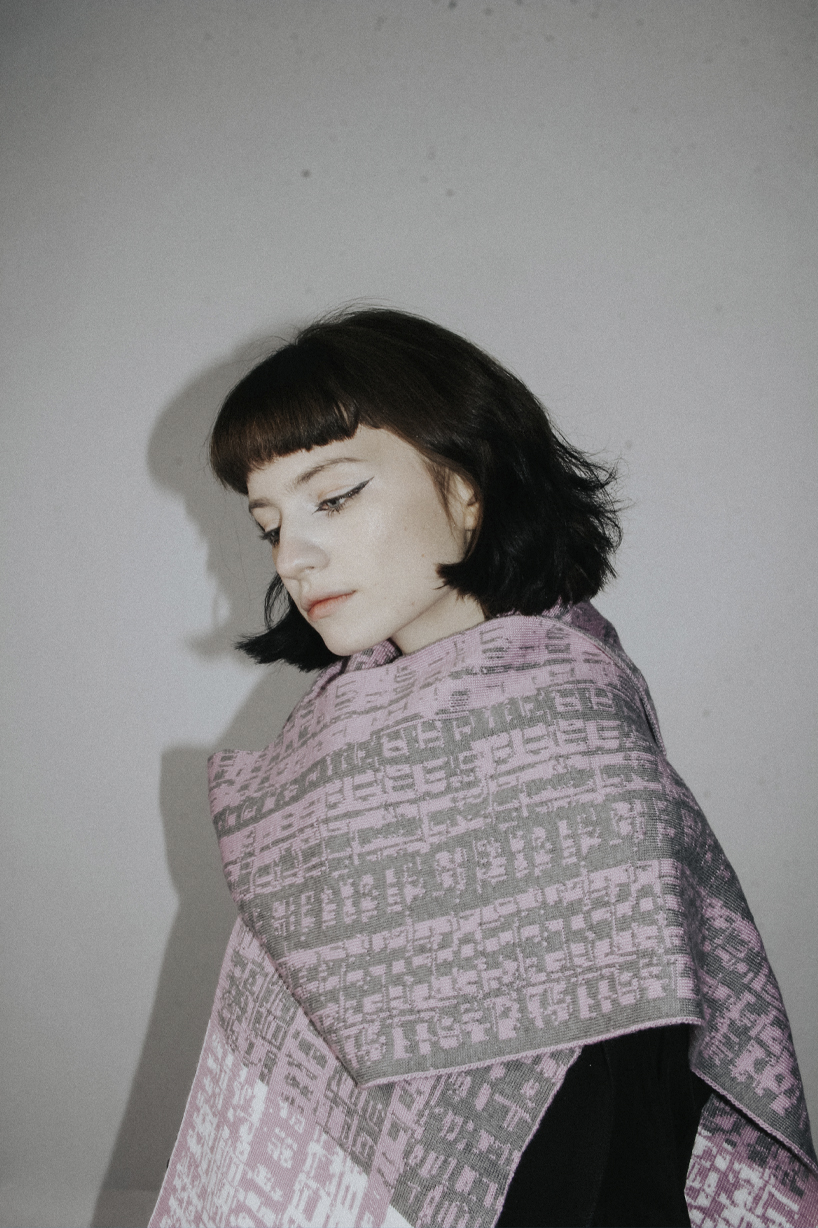
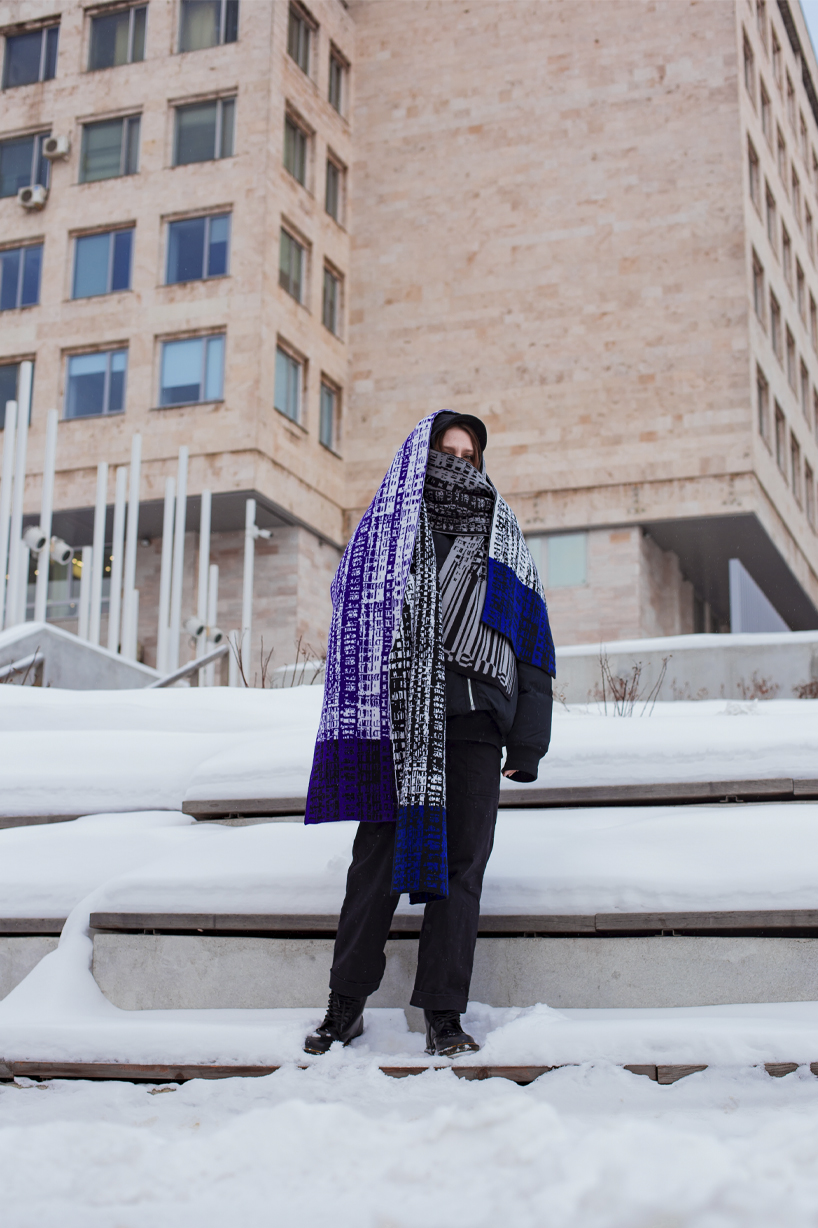
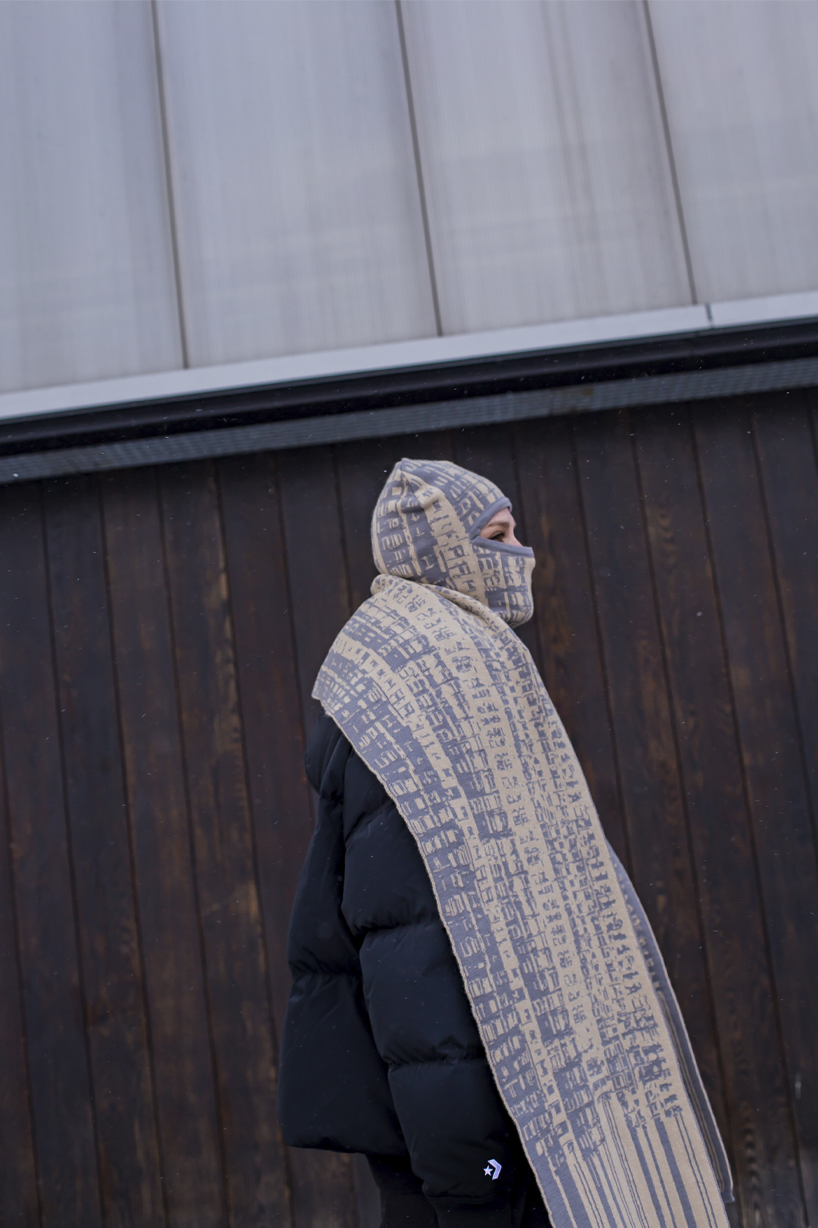
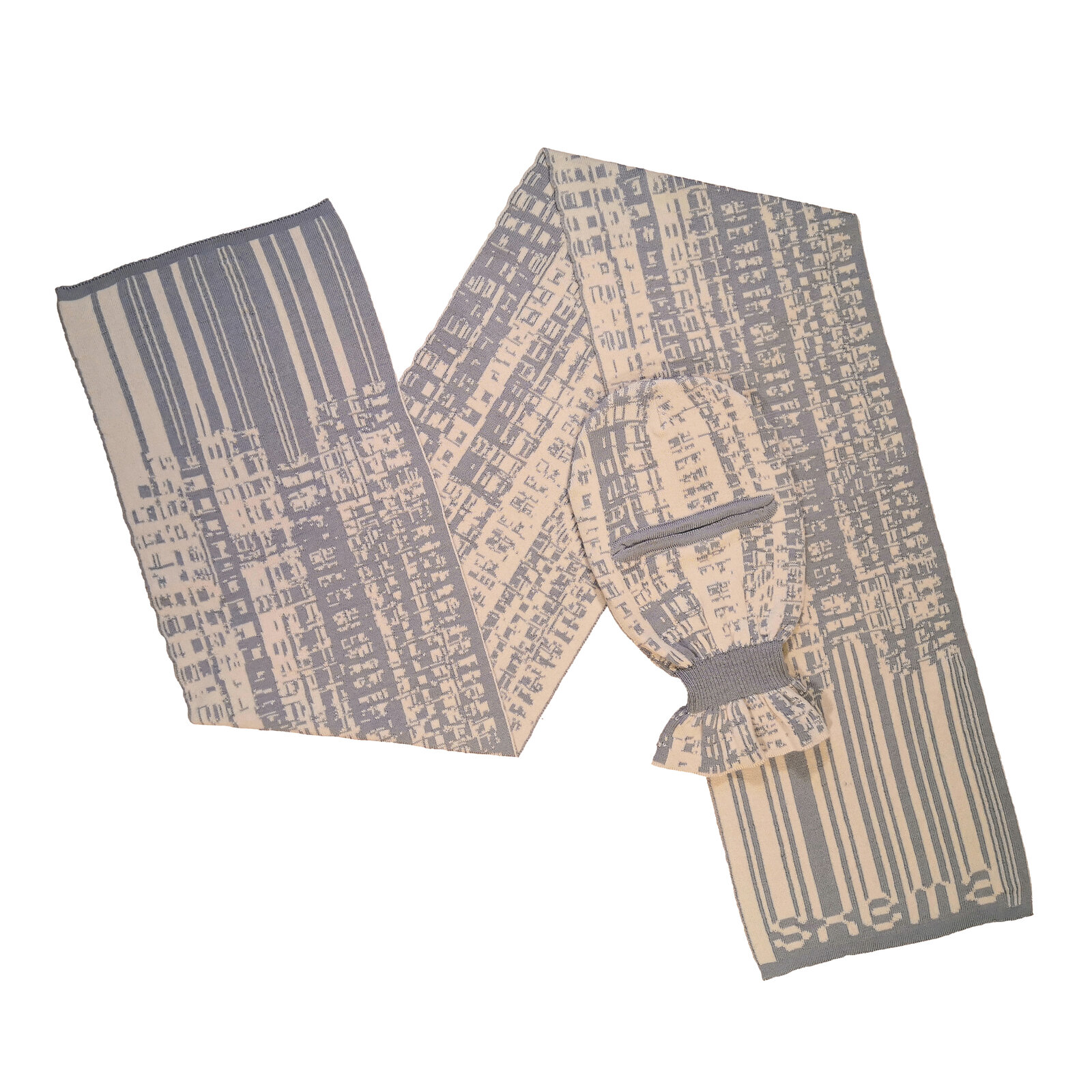
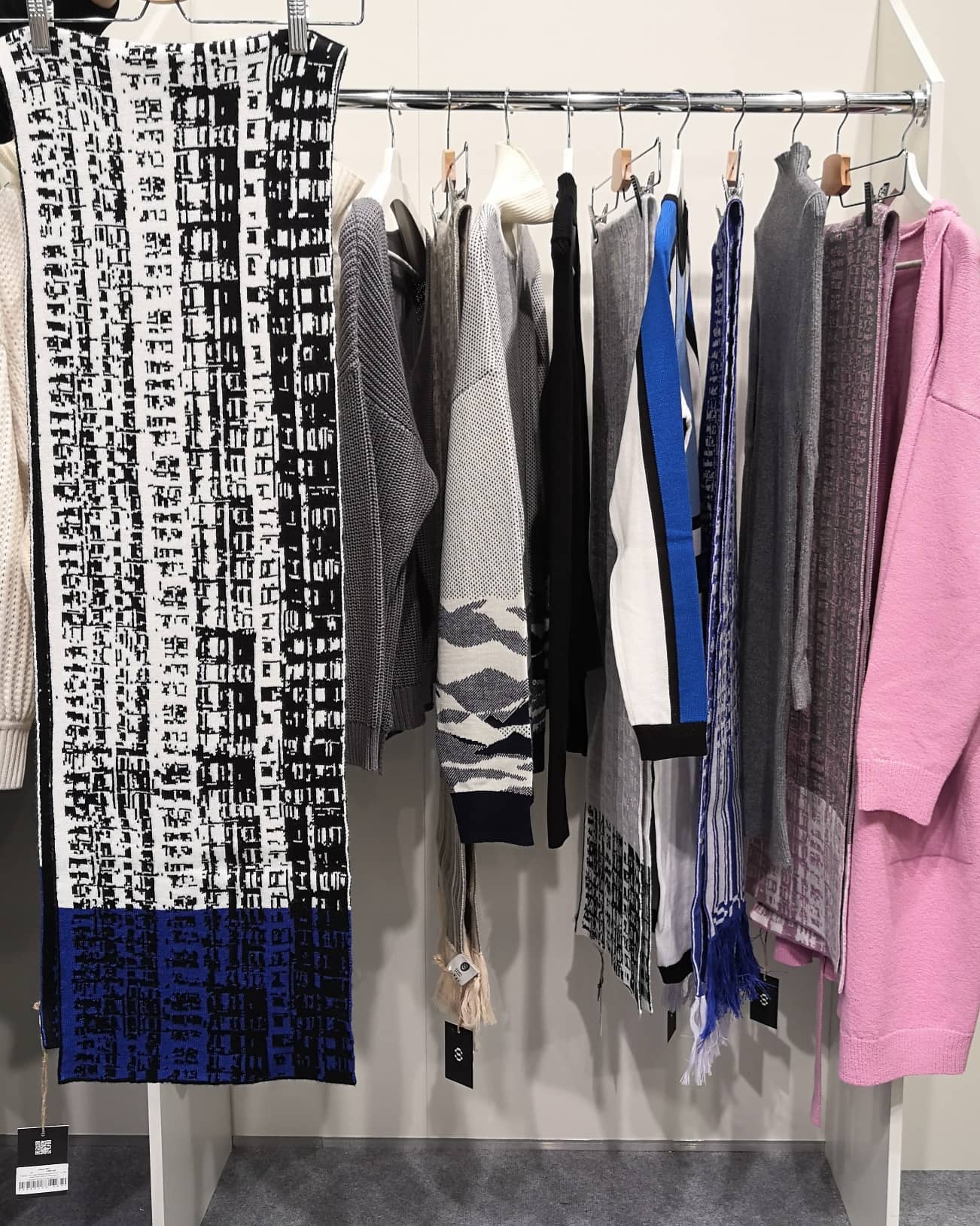
The images below document generated variations, 3D prototypes and finished textiles. A separate architectural digital collection appeared at Mercedes-Benz Fashion Week Russia in 2020; those looks were not direct digital twins of the knitted pieces.
How we made it
- 01 · ML collaborator
Train & generate
Model trained on around 10,000 housing photographs; generated pixel images.
- 02 · Eva + ML collaborator
Select & prepare
I selected motifs; palette reduction moved from manual editing to automation.
- 03 · Eva
Design & preview
I developed the garments and reviewed motif scale and colour in 3D.
- 04 · Knitting specialist
Program & knit
The desinator defined knit structures and prepared and checked M1 instructions.
Result and limitation
We made a physical knitwear collection, shared the process at a public workshop and received coverage in Designboom and Hype&Hyper.
Each colour in the image represented a yarn colour. A knitting programmer still had to define the knit structures and prepare and check the instructions in M1. Neural Monsters continued the same research with more automated image preparation and partial assistance in stitch programming; it still required specialist review and machine setup.
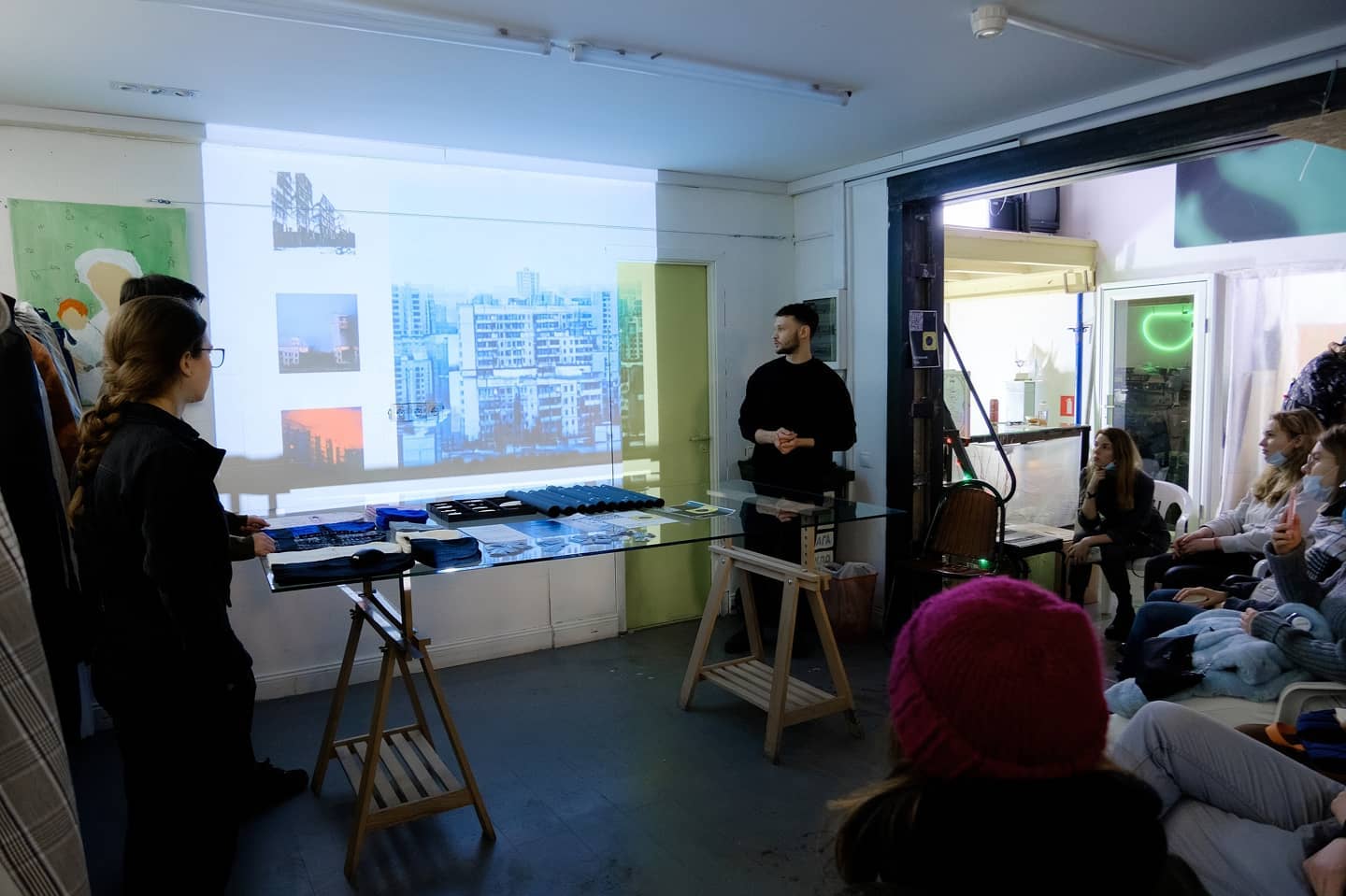
We later shared the 3D design process at an open discussion with Kruzhok in December 2020. Photographs from the event ↗
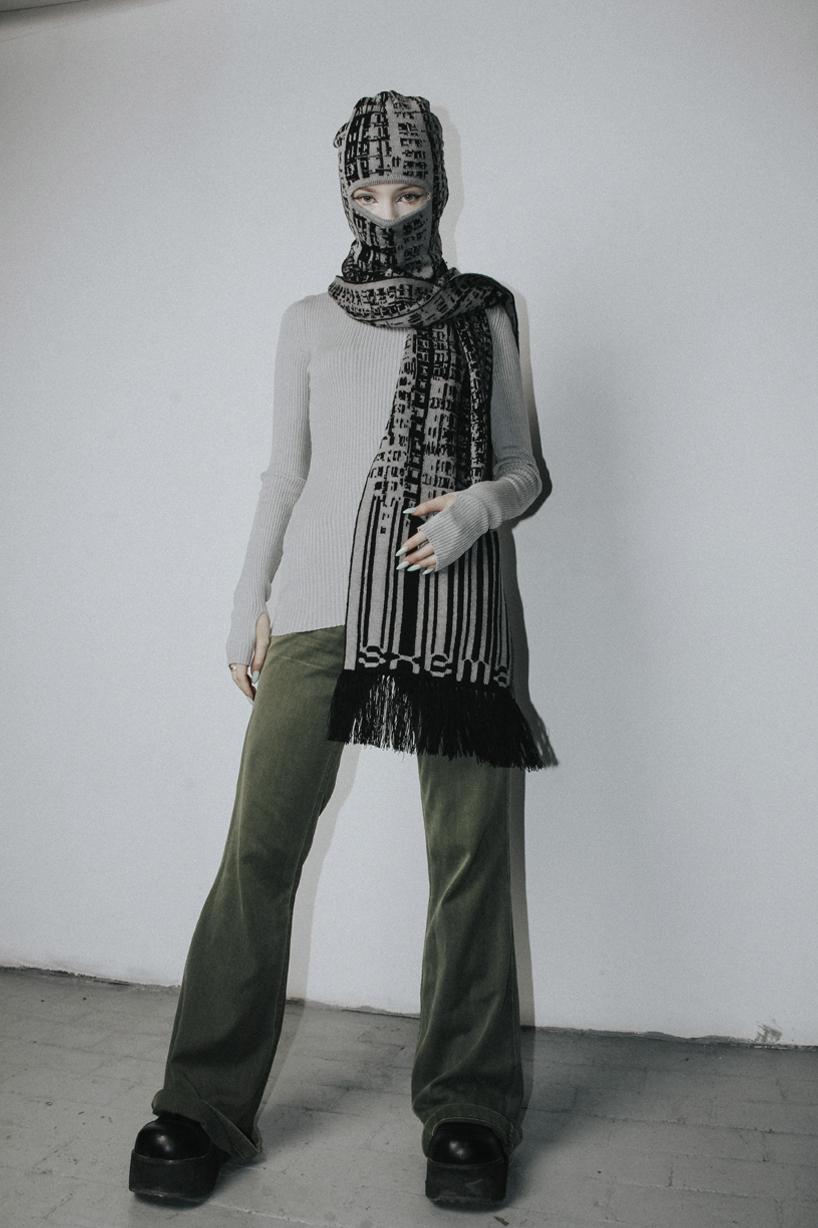
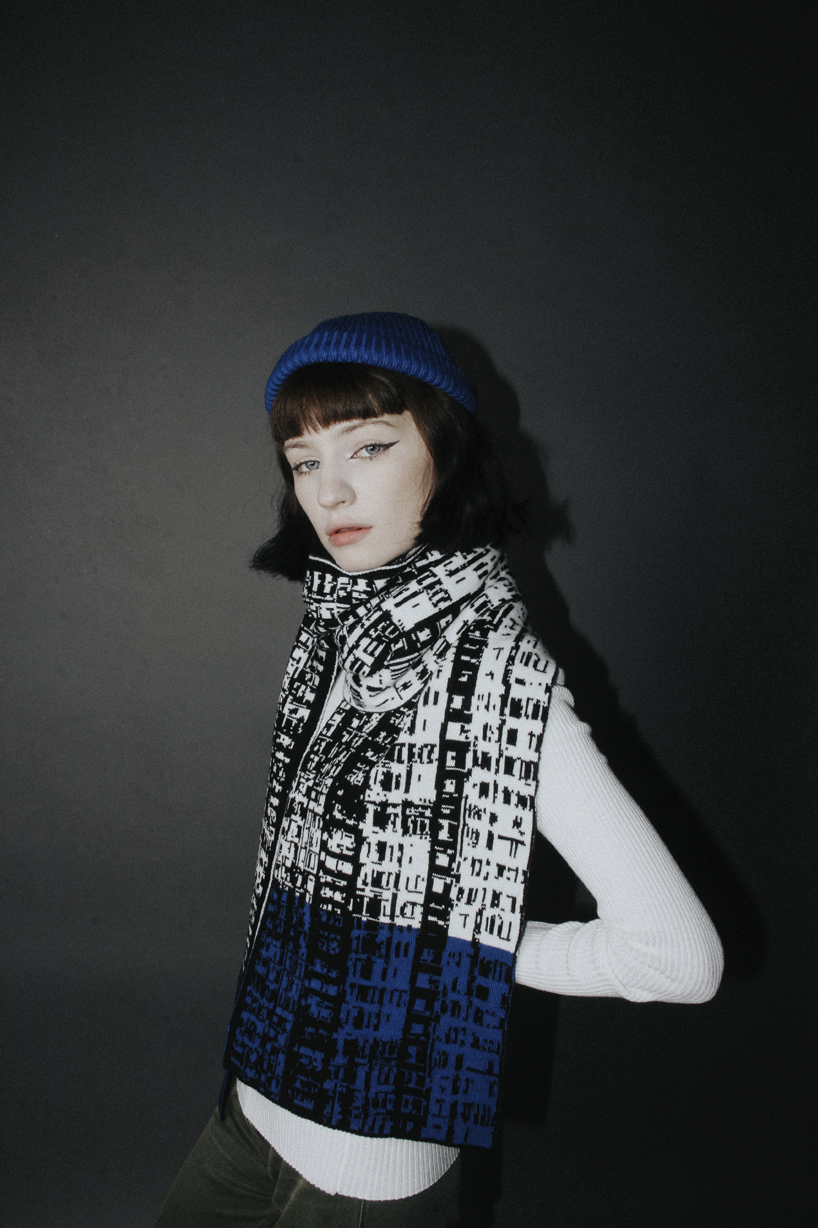
The physical collection
Eight views · Open a photograph to see it larger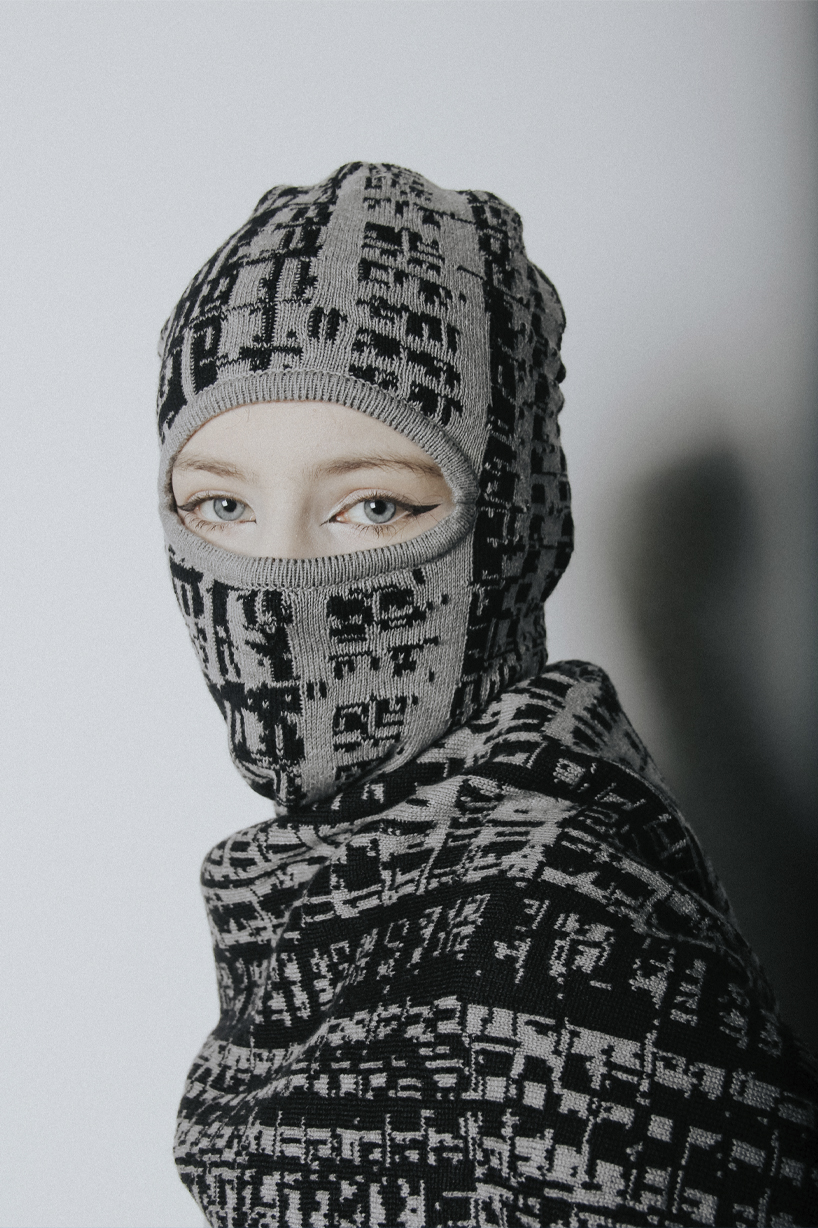
Sharing the method
At Kruzhok’s production space at Flacon, we discussed the image-to-knitwear process and ran a workshop for around 50 people. The recording is in Russian; its topic is the role of digital collections in physical production.
Explore the original research diary · 18 posts
Contemporary documentation from 2020–2021, including related digital experiments.
- The MBFW digital runway ↗
- Related experiment: Snapchat shoe try-on by Ilyas / @isdkv ↗
- Architectural camouflage and pattern study ↗
- Generated architectural imagery in motion ↗
- Digital garments: colour variants for DRESSX ↗
- Winter imagery and a new network in training ↗
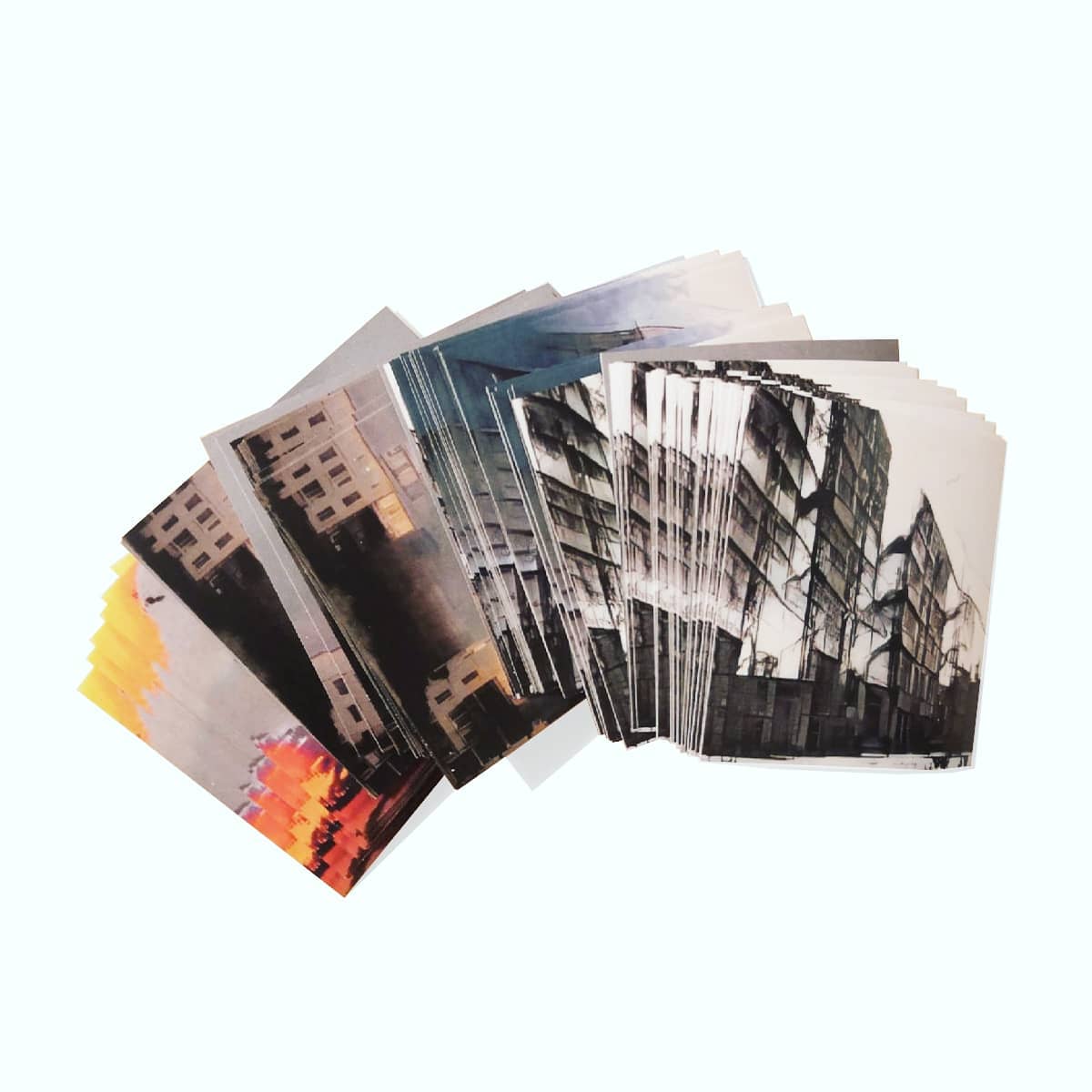
- Printed studies for the open talk ↗
- Rosee Factory: first permanent retail point ↗
- Photographs from the 25 December workshop ↗
- More from the Kruzhok open talk ↗
- NOT JUST A LABEL announcement ↗
- A year-end generative study ↗
- Digital knitwear prototype ↗
- Further neural architecture studies ↗
- The small first batch sells out; knitting resumes ↗
- Neural posters and stickers ↗
- CPM exhibition with Rosee Factory ↗
- Continued work on generative algorithms ↗
Supplementary digital studies and original posts
Further images and moving studies
Original posts · Open a post to view its full carouselDigital avatar and garment experiment, August 2021
If Instagram is unavailable, use the original post link below.
Further photographs of the open discussion with Kruzhok, December 2020
If Instagram is unavailable, use the original post link below.
SXEMA Snapchat footwear try-on video, October 2020
If Instagram is unavailable, use the original post link below.